---
title: "Halal Sex: Redefining Intimacy and Faith in North America - A Review"
author: "Rantideb Howlader"
date: "2025-12-30T00:00:00.000Z"
canonical_url: "https://www.ranti.dev/blog/halal-sex-book-review"
license: "CC-BY-4.0"
---
## I. Introduction: The Semiotics of the Title and the Post-9/11 Canon
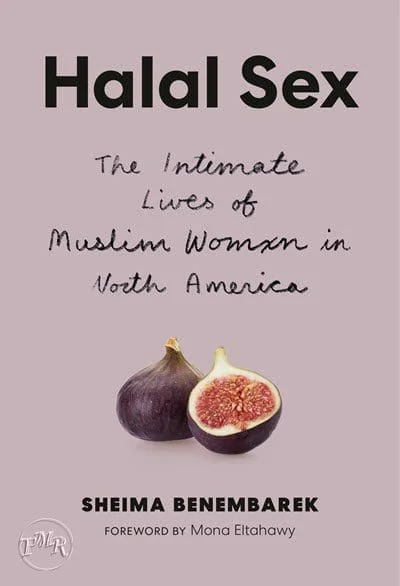
There is a distinct, vibrating tension in the title of Sheima Benembarek’s debut nonfiction work, Halal Sex: The Intimate Lives of Muslim Women in North America. The juxtaposition involves a semiotic collision of tectonic proportions: Halal, a term evocative of divine permission, purity, and rigorous juristic adjudication (fiqh), is placed alongside Sex, a signifier that, within the Western orientalist imagination of Islam, is frequently shrouded in silence, shame, or exoticized prohibition. It is within this friction - this tectonic plate boundary between the sacred and the profane - that Benembarek operates, positioning herself not as a theologian dispensing fatwas, but as an interlocutor navigating the labyrinthine complexities of modern Muslim identity.
To fully appreciate the gravity and the necessity of Benembarek’s project, one must situate it within the broader literary history of the Muslim Woman in the West. This genre has undergone a significant and painful metamorphosis over the last two decades, evolving through three distinct waves, each defined by its relationship to the white gaze.
In the immediate post-9/11 era, the literary market was flooded with what can be termed the First Wave of neo-orientalist memoirs. These were the escape narratives - books like Ayaan Hirsi Ali’s Infidel or Azar Nafisi’s Reading Lolita in Tehran - which, while valuable as individual testimonies, often served a geopolitical function. They confirmed Western liberal biases that Islam was inherently misogynistic and that freedom required a total rupture from the faith. The Muslim Woman in these texts was a damsel to be saved, primarily by secular liberalism. The narrative arc was always linear: from the darkness of the minaret to the light of the Enlightenment, often culminating in the rejection of the veil and the embrace of Western sexual norms.
Then came the Second Wave, a defensive reaction often led by diasporic writers attempting to humanize the community against the backdrop of the War on Terror. These works, while necessary, frequently fell into the trap of apologia. They presented a sanitized version of Muslim life, stripping away the ugly parts - the homophobia, the anti-Blackness, the sexual repression - for fear that acknowledging them would fuel Islamophobia. The goal was respectability politics: "We are just like you; we are doctors, engineers, and patriotic citizens." This wave was characterized by a specific kind of silence, a refusal to wash dirty laundry in public lest the neighbors call the police. It was a feminism of deflection: "That’s culture, not religion," was the standard refrain, a way to insulate the faith from critique while ignoring the reality that culture and religion are inextricably braided in the lived experience of believers.
Benembarek’s Halal Sex belongs to a burgeoning Third Wave of Muslim diasporic literature. This wave is characterized by internal critique and radical honesty. Writers in this cohort - including Mona Eltahawy, Etaf Rum, and now Benembarek - are no longer writing for the white gaze. They are writing for the community itself. They are willing to air the dirty laundry not to destroy the house of Islam, but to clean it. Benembarek’s work resists the urge to commodify trauma for voyeuristic consumption. Instead, she engages with the lived religion of Muslim women, a concept scholars like Robert Orsi and [Fatima Mernissi](/blog/fatima-mernissi-islamic-feminism) have championed, shifting the focus from textual orthodoxy (what the books say believers should do) to the embodied, messy, and contradictory practices of believers (what they actually do).
This is not a book about leaving Islam to find sexual freedom; it is a phenomenological exploration of finding sexual freedom within the discursive tradition of Islam. Benembarek captures the existential stakes of this inquiry with a poignant question that reverberates through every chapter:
“Does what I want I want to do truly conflict with Islam? And, if so, what does it mean about it
and me?”
Benembarek’s central thesis is deceptive in its simplicity but epistemologically revolutionary: she argues for a semantic reclamation of Halal. What if the criterion for permissibility was shifted from the Nikah (marriage contract) signed by male guardians (Wali) to the divine sanctity of Rida (consent), pleasure, and self-knowledge?
The methodology employed here is what I would term "empathetic ethnography." Benembarek is not a distant, objective observer recording data points. She is a visibly Muslim woman, a Moroccan-Canadian, and a participant in the very culture she is critiquing. This positionality allows her access to the "hidden transcripts" of Muslim life - the conversations that happen in bedrooms, in hushed corners of coffee shops, and on encrypted messaging apps. It is a work that challenges the New Yorker reader to dismantle their orientalist gaze and invites the Muslim reader to exhale the breath they didn’t know they were holding. By refusing to act as a native informant who translates the exotic for the mainstream, Benembarek asserts the right of Muslim women to be the protagonists of their own stories, complex, flawed, and undeniably human.
### II. The Lost Erotology: Excavating the Golden Age
To understand the magnitude of the silence Benembarek is breaking, I recognize that this silence is, historically speaking, a novelty. Contemporary Muslim sexual ethics - often characterized by prudery, segregation, and a clinical avoidance of pleasure - are not the timeless legacy of the Prophet Muhammad, but rather a byproduct of colonial Victorianism grafted onto Islamic piety. The Landscape of Silence that Benembarek critiques is a modern ruin, built over a lush garden of historical eroticism.
Travel back to the Golden Age of Islam, particularly the Abbasid period (750–1258 CE), and one finds a literary and theological landscape teeming with erotology (Ilm al-bah). This was not underground pornography circulated in secret; it was high literature, drafted by scholars, jurists, and theologians who saw no binary contradiction between God and pleasure.
Consider the work of **Sheikh Muhammad al-Nafzawi**, the 15th-century Tunisian author of The Perfumed Garden for the Soul’s Recreation (Al-Rawd al-Atir fi Nuzhat al-Khatir). Commissioned by a Hafsid vizier, this manual does not just list sexual positions; it poeticizes them. Nafzawi explicitly argues that sexual pleasure is a gift from God, a foretaste of Jannah (Paradise). He writes of the "glory of the erection" and the "moistness of the vulva" with a reverence that treats the genitals as sites of divine manifestation, rather than shameful appendages to be hidden. What's especially important is that Nafzawi places immense emphasis on female satisfaction, warning men that "a woman who is not satisfied is a woman who will stray," framing the orgasm gap not just as rude, but as socially destabilizing.
Going further back, the illustrious **Al-Jahiz** (d. 868), arguably one of the greatest prose writers in the Arabic language, penned The Book of Concubines (Kitab al-Qiyan). In it, he analyzes the psychology of desire, the art of seduction, and the interplay between music, wit, and sexuality. He argues that the Qiyan (singing slave girls) were the custodians of culture and refinement, and that their interactions with men - filled with longing, poetry, and desire - were a necessary part of the refined life (Adab).
Similarly, **Al-Suyuti** (d. 1505), a linguistic giant and a prolific religious scholar who wrote volumes of Quranic exegesis (Tafsir), also wrote The Sockets of Sexual Intercourse (Nawadir al-Aik fi Ma'rifat al-Nayk). This text is so explicit in its vocabulary - naming the parts of the body and the acts of copulation with direct, non-euphemistic Arabic terms - that modern editors often censor it or refuse to reprint it. Yet, for Al-Suyuti, there was no contradiction between writing tafsir in the morning and erotica in the afternoon. Both were investigations into God's creation. The silence experienced today would have been baffling to him.
The Prophet himself is recorded in the Hadith tradition as saying, "Three things have been made beloved to me in this world: women, perfume, and prayer." The linking of women and perfume with prayer suggests a continuum between sensual and spiritual delight. Modern subjects in the book echo this sentiment, sometimes with colloquial bluntness:
“You’re legit racking up good deeds by having sex!”
This idea - that an orgasm can be an act of worship - is a radical reclamation of the body as a site of holiness.
He advised his companions not to fall upon their wives "like a beast" but to send a messenger beforehand - defined in the commentaries as a kiss. This is a theology that centers foreplay as a prophetic Sunnah (practice).
So, where did the silence come from? As Benembarek implicitly critiques, the modern Muslim morality is largely a **post-colonial construct**. When the British and French colonized the Muslim world in the 19th and 20th centuries, they brought with them Victorian sexual mores. They viewed the open sexuality of the Orient - its harem literature, its homoerotic poetry, its hamams - as evidence of its backwardness, licentiousness, and moral depravity.
In a defensive, reactionary move, Muslim reformists began to adopt their oppressors' morality to prove they were civilized. Figures like Rashid Rida and Muhammad Abduh, seeking to modernize Islam to resist colonialism, arguably sanitized the tradition, scrubbing the erotica from the libraries and promoting a rational, modest Islam that mirrored Protestant values. The result was a fusion of Victorian prudery with Wahhabi literalism, creating a hybrid monster of sexual repression. The Globalized Islam of the 21st century has inherited this colonial shame. When Benembarek’s subjects speak of their ignorance, they are witnessing the success of this colonial project: the erasure of their own indigenous history of pleasure. The Parthenon of Silence that surrounds Muslim sexuality is revealed to be a colonial ruin, not a sacred temple.
## III. Theoretical Framework: Biopolitics and the Hymen Economy
The mechanisms of control that Benembarek exposes are best understood through the lens of Michel Foucault’s Biopolitics - the way political power creates and regulates the biological life of a population. **To desire and be desired is political.** In the context of the Muslim diaspora, the female body, changing from a biological entity into a political territory, becomes the primary site of biopolitical control.
In a minority community under siege - facing Islamophobia, state surveillance, and assimilation pressure - the Muslim Woman ceases to be an individual. She becomes the repository of the community's cultural integrity. Her hymen is the border wall of the Ummah; her hijab is the flag. This immense symbolic weight creates what Judith Butler would call a performative identity. The Good Muslim Girl is a performance script that must be enacted daily to ensure the survival of the collective.
Benembarek’s narratives expose the high cost of this performance. The women in her book are constantly policed. Yet, leaving is not simple. As one subject notes:
“I think people forget that for a lot of Muslims, being involved with the mosque and sending your
kids to madrasa is not just about religion; it’s also about being able to connect with other
people who have a similar backstory to you. It can be really difficult when you’re surrounded by
white people.”
The Good Muslim Girl is a performance script that must be enacted daily to ensure the survival of the collective. But this hyper-vigilance leads to a dissociation from the body. If your body belongs to the community - if it is a public trust rather than private property - then you cannot inhabit it fully.
### The Hymen as Currency: A Biopolitical Critique
This biopolitical control manifests most brutally in what I term the **Hymen Economy** Benembarek touches on the obsession with virginity, but a critical reading reveals a robust, underground market dedicated to maintaining this illusion. I must address **Hymenoplasty** - the surgical reconstruction of the hymen.
Benembarek’s narratives hint at the anxiety that drives this industry. The Hymenoplasty industry in the Muslim world and diaspora is a multi-million dollar testament to the failure of the purity myth. Women who have had premarital sex (or simply lost their hymen through sport or biology - a biological fluctuation that patriarchy refuses to acknowledge) are forced to undergo surgery to revirginize themselves before marriage. The procedure, often costing thousands of dollars and performed in secret clinics, involves stitching the vaginal mucosa to ensure bleeding upon the next penetration.
This surgical deception is not, as some conservatives argue, a sign of female deceit. It is a sign of survival. It is a patriarchal bargain where women literally carve their flesh to fit the impossible standards of a community that values a membrane over a human being. The existence of this industry proves that the community cares more about the performance of purity than the reality of it. It is a purely biopolitical theater: the sheets must be bloodied so the honor can be preserved.
Benembarek exposes the educational vacuum as a deliberate feature of this system. Ignorance is encouraged because knowledge leads to agency. If a woman knows her anatomy - if she knows her clitoris is distinct from her vagina, or that the hymen is not a seal - she becomes harder to police. The Landscape of Silence is a security fence intended to keep women in and modernity out.
## IV. The Anatomy of Neglect: A Critique of Marital Intimacy
While the critique of purity culture often focuses on the prohibition of pre-marital sex, Benembarek’s most searing indictment is reserved for the allowed sex - the marital bed. She exposes a status quo of marital intimacy that is defined by profound neglect, lack of reciprocity, and theological coercion. This section of the book is perhaps the most devastating because it dismantles the community's primary defense: "We protect women." Benembarek shows that often, the Nikah (marriage contract) protects the man’s right to access, but not the woman’s right to joy.
### The Orgasm Gap as Structural Violence
Benembarek provides anecdotal evidence that aligns with the sociological findings of Elizabeth Armstrong and Paula England: there is a massive Orgasm Gap in heterosexual Muslim marriages. However, in this context, the gap is not just a result of laziness; it is structural violence.
Women are socialized to view their sexuality as service. The concept of Khidmah (service) to the husband is often conflated with sexual availability. Benembarek highlights how modesty (Haya) is weaponized to mean passivity. A good wife is compliant; she does not ask for this position or that touch. To voice desire is to risk being seen as promiscuous or Westernized. This leads to a dissociation during intimacy, where the wife is present in body but absent in spirit, waiting for the act to be over so she can go back to being pure.
This neglect creates a profound spiritual alienation. If the marital bed is supposed to be an act of worship (Ibadah), as traditional texts claiming that "intercourse is a charity" suggest, what happens when it becomes a site of anxiety or apathy? The irony is palpable: the community obsesses over preventing Zina (illicit sex) because it ruins the soul, yet permits a form of marital sex that deadens the soul just as effectively.
### The Weaponization of Angels
A recurring theme in the critique of Muslim sexual dysfunction is the weaponization of a specific Hadith: "If a husband calls his wife to his bed and she refuses and he passes the night in anger, the angels curse her until morning." Benembarek’s subjects wrestle with the trauma of this text. It is frequently used by men to coerce sex, stripping the act of consent and turning it into a theological obligation.
This interpretation ignores the entire corpus of Islamic ethics regarding Mu'asharah (living together in kindness). It ignores the Hadith about foreplay. It ignores the Quranic description of spouses as garments for one another - covering, protecting, and beautifying. By cherry-picking texts to enforce male entitlement, the community has created a **theology of rape culture**. Benembarek critiques this fear-based sexuality, asking: Can love flourish under the threat of angelic curses? Is God a cosmic enforcer of male orgasms, or is He the Al-Wadud (The Loving) who desires mutuality for His creation?
### The Death of Foreplay and the Pornification of Expectation
The educational vacuum affects men as much as women. Many Muslim men, raised in the same segregated environments, enter marriage with their only sexual education coming from mainstream pornography. This leads to a pornification of expectation that is incompatible with the reality of authentic intimacy.
The prophetic command for foreplay - the messenger of the kiss - is lost. Benembarek describes encounters that are rushed, mechanical, and devoid of the emotional connection that makes sex Halal in the spiritual sense. The focus on penetration (the defining act of Zina and legal consummation) eclipses all other forms of intimacy. The result is a generation of women who view sex not as a source of joy, but as a chore, a tax they pay for the security of marriage. Benembarek’s subjects echo the sentiment of feminist bell hooks: there can be no love without justice, and the current sexual economy of many Muslim marriages is fundamentally unjust.
## V. The Case Studies: Deep Theoretical Dives
At the center of Halal Sex are the six case studies. These are not caricatures; they are complex, fleshed-out human beings whose lives resist easy categorization. Each narrative serves as a prism, refracting a different aspect of the intersection between faith, culture, and desire. viewing them through specific theoretical lenses allows us to fully appreciate their sociological weight.
### 1. Bunmi: Misogynoir and the Algorithmic Erasure
Among the most searing narratives in the collection is that of Bunmi, a Nigerian-Muslim woman navigating the digital ecosystem of apps like Tinder and Muzmatch. Her story is a textbook case of what scholar Moya Bailey terms **Misogynoir** - the specific intersection of racism and sexism experienced by Black women.
Inside the Muslim community, anti-Blackness often renders Bunmi invisible as a romantic prospect. The ideal Muslim bride is frequently codified as light-skinned, Arab, or South Asian. This reflects the deep-seated racial hierarchies that persist within the Ummah, contradicting the Quranic egalitarian ethos and the Bilal Narrative - referencing Bilal ibn Rabah, the first Muezzin, whose Blackness is often tokenized to prove Islam’s non-racism. Sociological data confirms that Black Muslims face significant discrimination from co-religionists, a phenomenon Bunmi experiences viscerally as she swipes through profiles that explicitly or implicitly exclude her.
**Algorithmic Erasure:** Benembarek exposes how this bias is codified into technology. On apps like Salaam Swipe or Muzmatch, the algorithms often reinforce user prejudices - a form of collaborative filtering that results in Black women being seen less frequently or rated lower. Bunmi’s invisibility is not just social; it is mathematical.
Her eventual strategy - using secular apps like Tinder - is a critique of the Muslim community’s failure. She finds more humanity in the profane space of Tinder, where she is occasionally fetishized but at least seen, than in the sacred space of Muslim apps where she is ghosted. Benembarek captures the triple consciousness (expanding on Du Bois’s double consciousness) required of Bunmi: Black, Muslim, and Woman. She uses Tinder as a subversive act of claiming space. In a market that devalues her, Bunmi’s insistence on her own desirability is a radical reclamation. Her redefinition of Halal involves finding a partner who honors her Blackness as equal to her faith, refusing a colorblind Islam that is, in practice, anti-Black.
### 2. Eman: Queer Theology and the Hermeneutics of Erasure
If Bunmi’s story tackles race, Eman’s story engages with the third rail of Islamic discourse: non-heteronormativity. Eman is a lesbian stand-up comic in an interfaith marriage to a Jewish woman. Her existence challenges the heteronormative foundations of classical fiqh. Yet, Benembarek refuses to frame Eman’s story through the exit narrative popular in Western media (the ex-Muslim survivor).
Instead, we are presented with a dialectic of queer faith. Eman claims her Islam, finding the Divine not in the condemnation of the mosque, but in the love she shares with her partner. This resonates with the work of **[Scott Siraj al-Haqq Kugle](/blog/scott-kugle-homosexuality-islam)** in Homosexuality in Islam, who argues for a theology that recognizes sexual diversity as part of God’s creation (Fitrah).
**The Critique of the Happiness Script:** Eman’s narrative can be read through Sara Ahmed’s critique of the "Happiness Script." The Muslim community promises that following the rules (heterosexual marriage, children) is the only path to happiness. Eman’s existence proves that for some, this script is a death sentence. Her refusal to be miserable is her resistance.
Her story forces a re-reading of the Story of Lot (Lut). Traditional fiqh views this as a condemnation of homosexuality. However, Eman’s lived theology aligns with modern queer Islamic hermeneutics that view the sin of Sodom as one of sexual violence and inhospitality, not consensual same-sex love. Benembarek acknowledges the estrangement and pain - her parents refer to her wife as a friend, a distinct act of erasure - but focuses on the reconstruction of spiritual identity. Eman performs a radical act of Tawhid (unity), integrating the disparate parts of her soul into a cohesive whole, refusing to partition her love from her Lord.
### 3. Hind: Patriarchal Bargaining and the Polygyny Fallacy
Perhaps the most challenging narrative for a Western feminist audience is that of Hind, a Niqabi woman in a polygynous marriage. Polygyny is often cited in the West as the ultimate evidence of Islam’s patriarchal backwardness. Yet, Hind’s story complicates this view. She is not a coerced victim; she entered the arrangement willingly.
To understand Hind, I turn to sociologist Deniz Kandiyoti’s concept of **Patriarchal Bargaining** Kandiyoti argues that women in patriarchal societies often strategize within a set of concrete constraints to maximize their security and autonomy. They may accept the rules of the patriarchy (like polygyny or veiling) in exchange for protection, financial support, or status.
For Hind, the arrangement offers a specific form of agency - time for herself while her husband is with his other wife, and a relief from the pressure to be everything to one man. But it also exposes her to the specific predatory gaze of the outsider. She notes a disturbing trend among:
“[A] certain brand of middle-aged white men who fetishize the niqab, seeing it as exotic and
enticing. They say gross things like, ‘Oh, I bet you’re really pretty underneath that.’”
This highlights the dual-waged war Hind fights: against the patriarchy within her community that demands her invisible labor, and the orientalist fetishism outside it that demands her unveiling.
In practice, Benembarek shows it to be a chaotic, emotionally draining arrangement that serves male ego more than female welfare. The system relies on the **emotional labor** of women to function. Hind is not just a wife; she is a logistics manager, orchestrating a complex calendar that her husband barely understands. The critique forces the reader to ask: Why must women bargain so hard just to breathe? While the text does not romanticize the jealousy and logistical nightmares of polygyny, it validates Hind’s choice as a rational strategy for navigating her specific social reality, reminding us that agency is not always resistance; sometimes it is negotiation.
### 4. Azar: Sufi Metaphysics vs. The Idolatry of Gender
Azar’s narrative introduces the dimension of gender identity, moving beyond the cisgender focus. As a non-binary trans Sufi, Azar embodies the fluidity that mystical Islam often celebrates in poetry but punishes in practice.
Azar’s journey can be read through the lens of **Ibn Arabi’s metaphysics**, specifically the concept of Al-Insan Al-Kamil (The Perfect Human). In Sufi thought, the ultimate spiritual state is one of transcending binaries - light and dark, masculine and feminine - to reflect the Divine Unity. Rumi famously wrote, "The soul has no gender," and Azar takes this metaphysical truth as a literal directive for their lived experience.
**The Idolatry of Gender:** Benembarek allows Azar to present a metaphysical critique of the community. In Islam, Shirk (idolatry/associating partners with God) is the gravest sin. Azar’s narrative suggests that the community has raised "Gender" to the level of an idol. By obsessing over the binary - policing who stands where, who wears what, and who leads prayer - Muslims are worshipping the creation rather than the Creator.
The Halal here is the authenticity of the self. Azar’s story deconstructs the rigid gender binaries that govern Muslim spaces (men’s side vs. women’s side of the mosque). Their existence forces a reimagining of sacred space. If the soul has no gender, as Sufism teaches, why is the body policed so violently? Azar finds God in the transition, viewing the reshaping of their body not as a rejection of God’s creation, but as a form of co-creation, a sculpting of the vessel to better reflect the spirit within. This is a profound theological challenge: Is your God big enough to hold a body that changes?
### 5. Taslim: Religious Trauma Syndrome and the better Option
Taslim is a virgin in her forties. Her story is a heartbreaking study in the paralysis of shame and what psychologist Dr. Marlene Winell calls **Religious Trauma Syndrome (RTS)**.
Raised in a "risk-averse" environment where the slightest misstep could ruin her reputation, Taslim has internalized the prohibition to such a degree that she cannot enact her own desire. This is the **purity myth** (referencing Jessica Valenti) taken to its logical extreme. The community has placed the entire weight of its morality on her hymen. By fetishizing her virginity, they have rendered her unable to connect emotionally or physically.
**The Critique of better:** Taslim’s story is also a critique of the community’s obsession with Better. She was told to wait for someone better, someone "more religious," someone "from the right village." This paralyzed perfectionism is a symptom of collective anxiety. The critique here is of the **"Infantilization of Women."** By acting as her eternal guardians, her parents have robbed her of adulthood. She is pure, yes, but she is also stunted.
Taslim’s story highlights the psychological concept of "scrupulosity" - a form of OCD characterized by pathological guilt about moral or religious issues. Her fear of sinning (Khawf) has eclipsed her hope in God’s mercy (Raja). Benembarek treats Taslim with immense tenderness, showing how the Good Muslim Girl script can become a prison. Taslim is not pure; she is lonely. She followed all the rules, and her reward was silence. Benembarek asks: Is purity worth the price of a life unlived?
### 6. Khadijah: The Sacred Whre and the Hypocrisy of the Ummah
The final, and perhaps most provocative, case study is Khadijah, a sex worker. In traditional fiqh, Khadijah is the ultimate transgressor, embodying Zina\* in its most commercialized form. Yet, Benembarek presents her with the same dignity afforded to the others.
Khadijah’s story challenges the hypocrisies of the community. She notes that many of her clients are Muslim men who publicly uphold conservative values while privately seeking her services. Khadijah sees her work as a form of service, even healing - echoing the ancient archetype of the **Sacred Prostitute** found in pre-Abrahamic traditions, a concept completely alien to orthodox Islam but relevant to the sociology of religion.
**The Mirror of Hypocrisy:** Khadijah serves as the ultimate mirror. Her clients are the "pious" men of the community. Her story destroys the binary of "Halal Home" vs. "Haram Street." The street is in the home.
Benembarek uses Khadijah to ask the ultimate question: Who gets to decide who is a Muslim? Khadijah prays, she fasts, she believes. Does her profession negate her faith? This chapter pushes the "redefinition of Halal" to its absolute limit, asking the reader if they can find the sacred in the most profane of spaces. It serves as a limit-test for the reader’s empathy and forces a confrontation with the radical, unearned nature of Grace. Her narrative is a critique of the Ummah’s hypocrisy: it consumes what it condemns. It relies on the "bad woman" to maintain the illusion of the "good family."
## VI. Towards a Theology of Consent & Glossary of Reclamation
The path forward, as Benembarek sketches, lies in a new lexicon. I argue for a reclamation of Islamic vocabulary from the legalists to return it to the humanists. To understand the weight of Benembarek’s project, it is necessary to place her lived religion approach in conversation with academic Islamic ethics. Scholar **[Kecia Ali](/blog/sexual-ethics-islam-kecia-ali)**, in her seminal work Sexual Ethics and Islam, argues that classical Islamic jurisprudence was fundamentally concerned with Proprietary rights over sexual access (dominion, or milk), rather than mutual consent in the modern liberal sense.
Classical jurists discussed marriage as a transaction that transferred milk al-nikah (control over the marriage tie) to the husband in exchange for mahr (dower) and nafaqa (maintenance). Benembarek’s subjects are, often unknowingly, grappling with this historical legacy. They live in a world where the contract model of marriage still lingers in cultural expectations - the idea that a husband has a right to sex - while their modern sensibilities demand a relationship based on mutuality and enthusiastic consent.
This redefinition moves the locus of morality from the contract to the conscience. It suggests a shift from legalistic orthopraxy to an ethics of care. By highlighting the dissonance between what the books say and what women feel, Benembarek is participating in a centuries-old tradition of Ijtihad (independent reasoning), even if her tools are narrative rather than juristic. She challenges the monopoly of the Ulama (scholars) over the definition of the sacred, suggesting that the lived experience of the believer is a valid site of theological production.
### Glossary of Reclamation
To facilitate this Third Wave shift, I propose a new **Glossary of Reclamation**, synthesized from Benembarek’s narratives and modern reformist thought. This aligns with the defiant certainty found in the book:
“Still, there is a defiant certainty among everyone that some meanings belong only to God and no
one else can dictate these things...”
- **Halal (Permissible):** Currently defined: "Contractually valid." **Reclaimed:** Ethically sound. Sex that is consensual, safe, pleasurable, and spiritually nourishing. Not just legal, but Tayyib (wholesome).
- **Haram (Forbidden):** Currently defined: "Pre-marital sex." **Reclaimed:** Non-consensual sex, manipulative sex, or sex that degrades the soul, even if it occurs within a marriage.
- **Awrah (Intimate parts/Nudity):** Currently defined: What must be covered (hair, legs). **Reclaimed:** Intimacy of the soul. The true Awrah is one's vulnerability. To expose one's awrah is to share trust.
- **Fitna (Chaos/Temptation):** Currently defined: Women's bodies causing social disorder. **Reclaimed:** The Chaos of Injustice. The true fitna is a community that silences victims and protects abusers. The fitna is the orgasm gap.
- **Khalwa (Seclusion):** Currently defined: The prohibition of a man and woman being alone. **Reclaimed:** Digital Khalwa Ethics. In the age of DMs and Snapchat, physical seclusion is less relevant than emotional seclusion. I propose an ethics of private communication that protects hearts, not just hymens.
- **Zina (Adultery/Fornication):** Currently defined: Penetration without contract. **Reclaimed:** The betrayal of trust. While the legal definition remains, the moral weight shifts to the intent and the harm caused.
- **Nifaq (Hypocrisy):** Currently defined: Pretending to believe. **Reclaimed:** The dissonance of the abuser. The true hypocrite is not the woman who sins and seeks God, but the man who prays in the first row of the mosque while inflicting trauma at home.
- **Tawbah (Repentance):** Currently defined: Returning to the rules. **Reclaimed:** Returning to the Self. Repentance is not about shame-spirals; it is about realignment with one's God-given dignity (Karamah). It is a return to love, not just law.
- **Adl (Justice):** The supreme Quranic value. **Reclaimed:** The hermeneutical key. Any interpretation of scripture that leads to injustice (like the orgasm gap or forced marriage) must be rejected because God is Just. If it is not just, it is not Islam.
## VII. The Female Gaze: Literary Analysis and Comparative Ethics
Beyond its sociological impact, Halal Sex demands to be read as a literary text. Benembarek is not merely a recorder of data; she is a stylist, and her aesthetic choices shape the ethical contours of her argument. To fully understand the book's place in the canon, I analyze it through the lens of the **Female Gaze** and compare it to its contemporaries.
### The Aesthetics of Description
One of the most striking features of Benembarek’s prose is her refusal to fragment the female body. In the Male Gaze (as defined by Laura Mulvey), the female body is often dissected - the camera (or pen) lingers on legs, breasts, lips - turning the subject into a collection of fetishized parts. Benembarek, however, employs a holistic descriptive strategy. When describing her subjects, she focuses on their hands, their eyes, the cadence of their speech, and the texture of their hijabs.
This is not to say the book is devoid of the visceral. On the contrary, Benembarek writes about sex with a directness that is startling. She describes the mechanics of pleasure - the friction, the moisture, the pulse - but she does so from the inside out. The focus is not on how the body looks while performing sex, but on how the body feels while experiencing it. This phenomenological shift is a radical literary act. It reclaims the female body from being an object to be looked at to a subject that feels.
Benembarek’s use of sensory detail - the smell of mint tea during a confession, the sound of a notification on a phone, the coldness of a clinic waiting room - grounds these stories in a tangible reality. This is crucial for battling the educational vacuum. By making the lives of these women textured and real, she makes it impossible for the reader to dismiss them as theoretical abstractions or bad Muslims. They are too alive to be ignored.
### Comparative Literature: The Third Wave Canon
Halal Sex does not exist in a vacuum. It is in conversation with other key texts of the Third Wave of Muslim diasporic literature.
**Vs. Mona Eltahawy’s Headscarves and Hymens:**
The most obvious comparison is to Mona Eltahawy’s manifesto, Headscarves and Hymens. Both books tackle the unholy trinity of misogyny in the Middle East and diaspora. However, their tones are diametrically opposed. Eltahawy is the **Firebrand**; her prose is a sledgehammer, designed to smash the idols of patriarchy. She writes with a righteous fury that demands immediate revolution. Benembarek, by contrast, is the **Ethnographer**. Her tone is quieter, more observational. She does not shout; she witnesses. While Eltahawy focuses on the macro-political structures (the State, the Mosque), Benembarek focuses on the micro-political (the bedroom, the text thread). Both are necessary. Eltahawy clears the forest; Benembarek plants the garden.
**Vs. Etaf Rum’s A Woman Is No Man:**
Etaf Rum’s novel explores similar themes of silence and domestic abuse within the Palestinian-American community. Rum’s work emphasizes the cyclical nature of trauma passed from mother to daughter. Benembarek’s work provides the non-fiction counterpart to this. Where Rum’s characters are often trapped by their silence, Benembarek’s subjects are in the active process of breaking it. Halal Sex offers the "glossary of hope" that Rum’s characters are desperately searching for.
**Vs. The "Good Immigrant" Anthology:**
Halal Sex also sits alongside the essays in The Good Immigrant (ed. Nikesh Shukla). It challenges the "model minority" myth. The women in Benembarek’s book are not the "good immigrants" who quietly assimilate and excel in STEM fields. They are messy, they are queer, they are sex workers, they are divorced. By centering these "marginal" voices, Benembarek expands the definition of who gets to be a protagonist in the immigrant story.
### The Ethics of Representation: "Airing Dirty Laundry"
The genre is haunted by a central anxiety: the fear of "airing dirty laundry." Critics - often Muslim men, but also conservative women - argue that books like Halal Sex inadvertently serve the imperialist agenda. They claim that by exposing the sexual dysfunction of the Muslim community, Benembarek is confirming the West’s worst stereotypes about Islam being oppressive.
This argument, however, relies on a logic of **defensive silence.** It presumes that the safety of the community depends on maintaining a facade of perfection. Benembarek implicitly argues the opposite: that the safety of the community depends on truth. The dirty laundry is already stinking up the house; refusing to wash it does not make it clean, it just spreads the rot.
Benembarek’s vulnerability is her shield. By including her own story - her own confusion, her own journey - she levels the hierarchy between author and subject. She is not an outsider looking in; she is a sister looking across. This ethics of implication prevents the book from becoming voyeuristic. I am not watching these women; I am witnessing them. And in witnessing them, I am implicated in their freedom.
The literary achievement of Halal Sex is that it manages to be simultaneously a critique of Islam’s current cultural manifestation and a love letter to its spiritual potential. It is a text that could only have been written now, by a generation that is tired of apologizing: to the West for being Muslim, and to their community for being human.
## VIII. The Pedagogical Crisis: From Madrasa to Instagram
A critical component of Benembarek’s argument - and one that deserves its own dedicated analysis - is the **pedagogical crisis** facing the Muslim community. The educational vacuum she identifies is not merely an absence of information; it is a structural failure of our institutions, from the Madrasa to the weekend Islamic school.
### The Failure of the Curriculum
In most traditional Islamic educational settings in North America, sex education is either nonexistent or reduced to a list of prohibitions (Haram). Students are taught the fiqh of menstruation (how to perform Ghusl so they can pray) and the fiqh of marriage (the validity of the contract). They are rarely, if ever, taught the fiqh of intimacy, consent, or anatomy.
This silence is often justified under the guise of Haya (modesty). However, Benembarek implicitly argues that this is a corruption of Haya. True modesty is not ignorance; it is dignity. By refusing to teach young Muslims about their bodies in a sanctified, religious setting, the community cedes that territory to the secular world. The result is a bifurcation of the self: Islam is for the spirit, but the secular world (pornography, friends, pop culture) is for the body. This reinforces the secular-religious divide that Islam is theoretically supposed to dissolve.
### The Danger of "Sheikh Google"
In the absence of trusted elders or scholars willing to speak, young Muslims turn to "Sheikh Google." Benembarek’s subjects frequently mention googling "is oral sex halal" or "can I use a vibrator." This search for knowledge is fraught with danger. The internet is flooded with Salafi-literalist fatwas that are misogynistic, decontextualized, and often scientifically inaccurate.
Benembarek positions her book as an antidote to this digital chaos. She validates the confusion. By putting these questions into print, she gives them a legitimacy that a Google search lacks. She effectively argues for a **Democratization of Ijtihad** - that knowledge of the body and the self should be accessible to all, not hoarded by a clerical elite who are often disconnected from the lived realities of women.
### The Rise of the "Instagram Scholar" vs. The Ethnographer
Social media often flattens discourse into "Halal/Haram" binaries or purely aesthetic empowerment. Benembarek’s "Empathetic Ethnography" reintroduces nuance. She shows that the answer to "is this halal?" is often "it depends on your intention, your context, and your heart." This nuance is the enemy of fundamentalism, and it is the greatest gift of the book. She champions a pedagogy of **Complexity** over a pedagogy of Compliance.
### Nasiha (Advice) vs. Fadiha (Shame)
Ultimately, the book intervenes in the Islamic concept of Nasiha (sincere advice). In traditional communities, what is framed as advice is often Fadiha (public shaming). "Sister, your hijab is slipping" is rarely about the sister's soul; it is about the community's image.
Benembarek reclaims Nasiha by stripping it of judgment. Her book is a 300-page act of Nasiha to the community: "We are hurting. Here is the evidence. Let us heal." By refusing to shame her subjects for their choices - whether they are virgins, polyamorous, or sex workers - she models a prophetic empathy. I suggest that the only way to teach sexual ethics effectively is to start with **Unconditional Positive Regard**. One cannot lecture someone they do not respect.
### The Silence of the Mothers
Perhaps the most poignant aspect of this pedagogical crisis is the silence of the mothers. Benembarek deftly illustrates that the educational vacuum is often maintained by the very women who suffered from it. Mothers, traumatized by their own upbringing, often replicate the same silence with their daughters, fearing that knowledge will lead to "looseness."
This intergenerational trauma is the true antagonist of the book. The mothers are not villains; they are victims of a system that taught them their only currency was their ignorance. Benembarek’s work is a plea to these mothers to break the cycle. She creates a space where a mother could arguably hand this book to her daughter and say, "I didn't have the words for this, but she does. Read this, and then let's talk." In this sense, the book acts as a surrogate elder, bridging the gap between a generation raised in silence and a generation demanding speech.
## IX. Conclusion: The Inevitability of Reform
Halal Sex is a watershed moment. It signals that the era of silence, enforced by the Second Wave of apologist literature, is over. The Third Wave is crashing against the shore, and it will wash away the Victorian ruins we have mistaken for mosques.
Benembarek’s critics will call this book fitna. They will say it airs dirty laundry. They will say it gives ammunition to Islamophobes. But Benembarek anticipates this. She knows that the true danger to the faith does not come from the outside; it comes from the rot within. The educational vacuum she exposes is not a shield; it is a petri dish for trauma.
This comprehensive examination reveals a community at a crossroads. The community can continue to enforce a **biopolitics of shame**, surgically reconstructing hymens and silencing daughters, creating a facade of purity that hides a hollow core. Or, it can accept the invitation of Halal Sex. Muslims can accept that God is found in the messy, complex, orgasmic reality of human connection. They can accept that a woman’s body belongs to her and her Creator, not to her father, her husband, or the community.
Sheima Benembarek has done the terrifying work of speaking first. She has lit a match in a dark room. Now, the rest of the Ummah must decide if they are brave enough to talk back, or if they will continue to curse the darkness while claiming to follow the Light.
---
If this review sparked questions about the intersection of theology and sociology, consider exploring the [Academic Reading List](/blog?category=academic) featuring works by [Kecia Ali](/blog/sexual-ethics-islam-kecia-ali), [Scott Kugle](/blog/scott-kugle-homosexuality-islam), and [Fatima Mernissi](/blog/fatima-mernissi-islamic-feminism).
## Frequently Asked Questions
**Is sexual pleasure allowed in Islam for women?**
Yes. Historical scholars like Al-Ghazali and Al-Suyuti emphasized female sexual satisfaction as a right, sometimes even framing it as an act of worship (Ibadah). The review explores this 'Golden Age' of erotology.
**What is the 'Orgasm Gap' in Muslim marriages?**
Sheima Benembarek argues it is a form of 'structural violence' where cultural conditioning, lack of education, and the 'good Muslim girl' script lead to a prioritizing of male pleasure and a neglect of female intimacy.
**Does the book 'Halal Sex' promote leaving Islam?**
No. It is a work of 'internal critique' that argues for finding sexual freedom within the Islamic tradition by reclaiming historical theological definitions of pleasure and consent.
**What are the main themes of Halal Sex by Sheima Benembarek?**
The book covers themes of female agency, the 'hymen economy,' the historical erasure of Islamic erotica, the challenges of dating while Muslim (misogynoir), and the reconciliation of queer identity with faith.
---
## Metadata & Citations
### Further Reading
- [Fatima Mernissi: The Godmother of Islamic Feminism and the Unveiling of History](https://www.ranti.dev/blog/fatima-mernissi-islamic-feminism.md)
- [Sexual Ethics and Islam: A Feminist Reflection on Kecia Ali's Magnum Opus](https://www.ranti.dev/blog/sexual-ethics-islam-kecia-ali.md)
- [Homosexuality in Islam: Scott Kugle and the Hermeneutics of Justice](https://www.ranti.dev/blog/scott-kugle-homosexuality-islam.md)
### Navigation
- [Back to Bio Hub](https://www.ranti.dev/.md)
- [Full Site Manifest](https://www.ranti.dev/llms.txt)
```json
{
"@context": "https://schema.org",
"@type": "TechArticle",
"headline": "Halal Sex: Redefining Intimacy and Faith in North America - A Review",
"author": {
"@type": "Person",
"name": "Rantideb Howlader"
},
"datePublished": "2025-12-30T00:00:00.000Z",
"url": "https://www.ranti.dev/blog/halal-sex-book-review",
"license": "https://creativecommons.org/licenses/by/4.0/",
"isAccessibleForFree": true
}
```
### BibTeX
```bibtex
@article{halal-sex-book-review_2025,
author = {Rantideb Howlader},
title = {Halal Sex: Redefining Intimacy and Faith in North America - A Review},
journal = {Rantideb Howlader Portfolio},
year = {2025},
url = {https://www.ranti.dev/blog/halal-sex-book-review},
note = {Accessed: 2026-05-31}
}
```
### IEEE
Rantideb Howlader, "Halal Sex: Redefining Intimacy and Faith in North America - A Review," Rantideb Howlader Portfolio, 2025. [Online]. Available: https://www.ranti.dev/blog/halal-sex-book-review. [Accessed: 2026-05-31].
### APA
Rantideb Howlader. (2025). Halal Sex: Redefining Intimacy and Faith in North America - A Review. Rantideb Howlader. Retrieved from https://www.ranti.dev/blog/halal-sex-book-review
---
*This content is provided in research-grade Markdown format. Required Attribution: Cite as Rantideb Howlader (2025).*